Serving Lancaster, CA and surrounding areas. (661) 952-4799
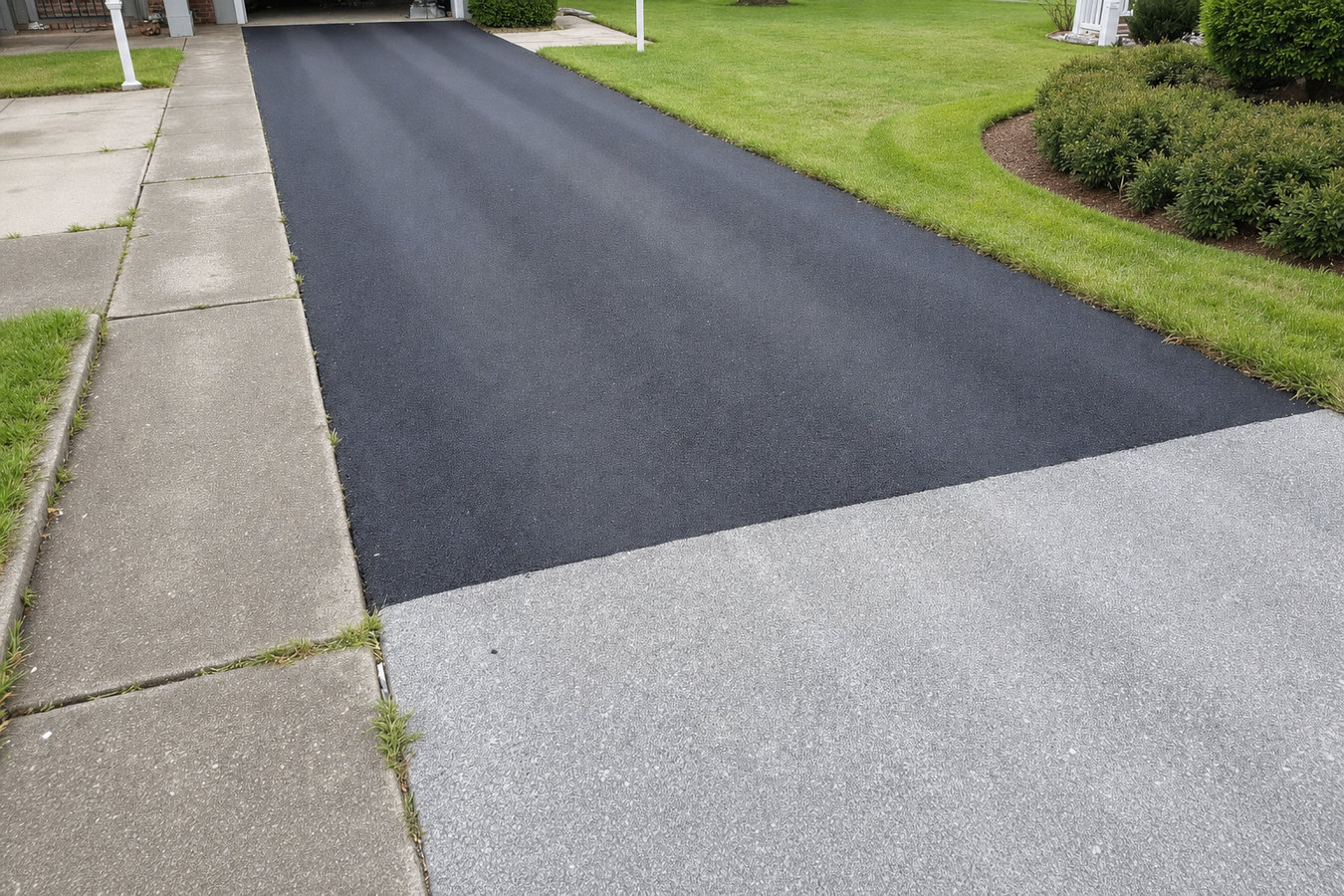
Worn, cracked asphalt does not always need to be ripped out and started over. A fresh overlay bonds directly to your existing surface and adds years of life at a fraction of full replacement cost.
Asphalt resurfacing in Lancaster means laying a fresh layer of hot-mix asphalt over your existing driveway or parking surface - the old pavement stays in place, the new layer bonds on top, and most residential driveways are done in a single day with 24 to 72 hours of cure time before you park on it.
Resurfacing works when the base underneath is still structurally sound and the damage is mostly at the surface level. If you have widespread cracking, fading, and rough spots but the ground beneath is not heaving or sinking, resurfacing is almost always the right call before a full tear-out becomes necessary. Many homeowners also combine this service with pothole repair to address isolated failures before the new layer goes down.
We have been resurfacing driveways and lots across Lancaster since 2017, and we always assess the base honestly before recommending which approach is right for your specific surface.
Fresh asphalt is deep black. When it fades to a dull gray under the Antelope Valley sun, the binder that holds the surface together is drying out and becoming brittle. That color change means the pavement is more likely to crack and crumble at the edges - and it is a reliable signal that the surface layer needs replacing.
When you see a network of small cracks spreading across your driveway - sometimes called an alligator pattern - sealing alone will not help. In Lancaster's intense sun and heat, this kind of surface fatigue happens faster than in cooler climates, and resurfacing before the cracks deepen protects the base from water intrusion.
Puddles sitting on your driveway after rain or car washing mean the surface has developed low spots or the slope has shifted. In the Antelope Valley's clay-heavy soils, that standing water causes the ground to swell and shift, making the problem progressively worse each wet season.
Edge deterioration is one of the earliest visible signs that a driveway needs attention. When the borders start to chip, break off, or sink, the pavement has lost structural integrity at the margins - and that damage tends to work its way inward if left alone.
We start every resurfacing job with a thorough surface assessment to confirm the base is still solid enough to support the new layer. From there, the crew repairs any problem areas - patching potholes, filling cracks, trimming edges, and correcting drainage slopes - before any new asphalt goes down. Skipping prep is the most common reason a resurfacing job fails early, and we do not skip it. For surfaces with more severe base issues, we may recommend asphalt milling before the new layer is applied to ensure a proper bond.
The resurfacing itself involves spreading a load of hot-mix asphalt evenly across the prepared surface and then rolling it while still warm for consistent compaction throughout. We size the overlay to the specific conditions of your surface - not a minimum spec that works until the first heat wave. We also walk every completed job with the property owner before we leave and note anything that should be addressed at the follow-up sealing stage.
Ideal for homeowners with driveways that are visibly worn or cracked but still have a structurally sound base underneath.
Right for property managers and business owners needing to restore a large surface area without the cost and downtime of full replacement.
For surfaces with isolated base failures - cut out, repair, and re-lay those sections before the overlay goes down for a uniform result.
Best for property owners who want to schedule their follow-up seal after the standard six-to-twelve-month cure window to maximize surface life in Lancaster's UV.
Lancaster sits in the high Mojave Desert at roughly 2,300 feet elevation, where summer temperatures regularly top 100 degrees F and UV radiation is intense year-round. That combination breaks down asphalt binders faster than in coastal California, causing driveways and lots to oxidize, dry out, and crack sooner than the national average. In communities like Palmdale and across the Antelope Valley, homes built in the 1980s and 1990s now have driveways that have been baking under the desert sun for three to four decades - many of them are long past the point where sealing alone is the right answer.
What Lancaster does not have to deal with is the freeze-thaw cracking that drives so much pavement damage in colder climates. What it does deal with is expansive clay soil that shifts when it absorbs moisture from the region's occasional heavy winter storms. A contractor familiar with local soil conditions will assess whether your base is still stable before recommending resurfacing - covering a failing base with a new layer is not a repair, it is a delay. We also know that in Lancaster, the curing window matters more than it does elsewhere. Hot summer surface temperatures keep fresh asphalt pliable longer, which is why we always give property owners in areas like Quartz Hill a specific wait time based on the forecast - not a generic number.
Reach us by phone or the contact form and describe your surface. We respond within one business day and schedule a site visit - we never quote a firm price without seeing the job in person first.
We walk the driveway or lot, check the base condition, identify any drainage issues, and measure accurately. You receive a written estimate detailing the scope, materials, and timeline - no verbal-only quotes.
The crew cleans the surface, patches any deep damage, corrects drainage slopes, and trims edges. Hot-mix asphalt is then spread evenly and rolled while still warm. For a standard residential driveway, the laying and rolling usually take just a few hours.
Stay off the surface for the time your contractor specifies - at least 24 to 48 hours, and up to 72 hours in summer heat. We walk the finished job with you and provide guidance on when to schedule your follow-up sealcoat.
We will come out, look at your surface, and give you a written quote - no guessing, no obligation, and no surprises on job day.
(661) 952-4799We have been laying hot-mix asphalt in Lancaster and across the Antelope Valley long enough to know how the desert heat, expansive soils, and seasonal weather patterns affect a finished surface here. That experience shapes every base assessment and material choice we make.
Our California contractor license can be verified in a few minutes through the Contractors State License Board. Licensing means accountability - you have real recourse if anything goes wrong, which an unlicensed contractor cannot offer.
We will tell you if your surface needs full replacement instead of resurfacing - even when that is not what you were hoping to hear. Resurfacing over a failed base is money wasted, and we would rather give you the honest answer upfront than have you calling us again in two years.
The National Asphalt Pavement Association publishes mix specifications for high-temperature environments, and we choose materials that meet those standards for Lancaster's climate - so your surface does not go soft or rut during a July heat wave.
The combination of local climate knowledge, honest assessments, and the right materials means the work we do holds up through Lancaster's punishing summers - not just through the first season. That is the standard we hold ourselves to on every job we take.
Address individual failures in driveways and parking lots before they spread - pothole patching is often the first step before a resurfacing overlay goes down.
Learn MoreWhen a surface needs more than an overlay can provide, milling removes the deteriorated top layer to create a clean, level base for new asphalt.
Learn MoreSpring is the best time to pave in the Antelope Valley - contact us now before the summer heat arrives and scheduling fills up.